
In the fast-moving world of PC hardware, 2026 has marked a significant turning point for power delivery standards as including for ATX 3.1. With the release of the NVIDIA RTX 50-series “Blackwell” GPUs, the requirements for a reliable Power Supply Unit (PSU) have shifted from simple wattage calculations to a focus on cable standards and transient spike management. For many builders, the $120 price point is the sweet spot. It is the threshold where you move away from budget-tier units and enter the realm of high-efficiency, gold-rated reliability that can safely power a high-end gaming rig.
But how do you choose the best PSU for your gaming PC? There are many factors to consider, such as wattage, efficiency, modularity, size, noise, and features. In this blog post, we will explain each of these factors and give you some recommendations for the best PSUs for gaming in 2026.
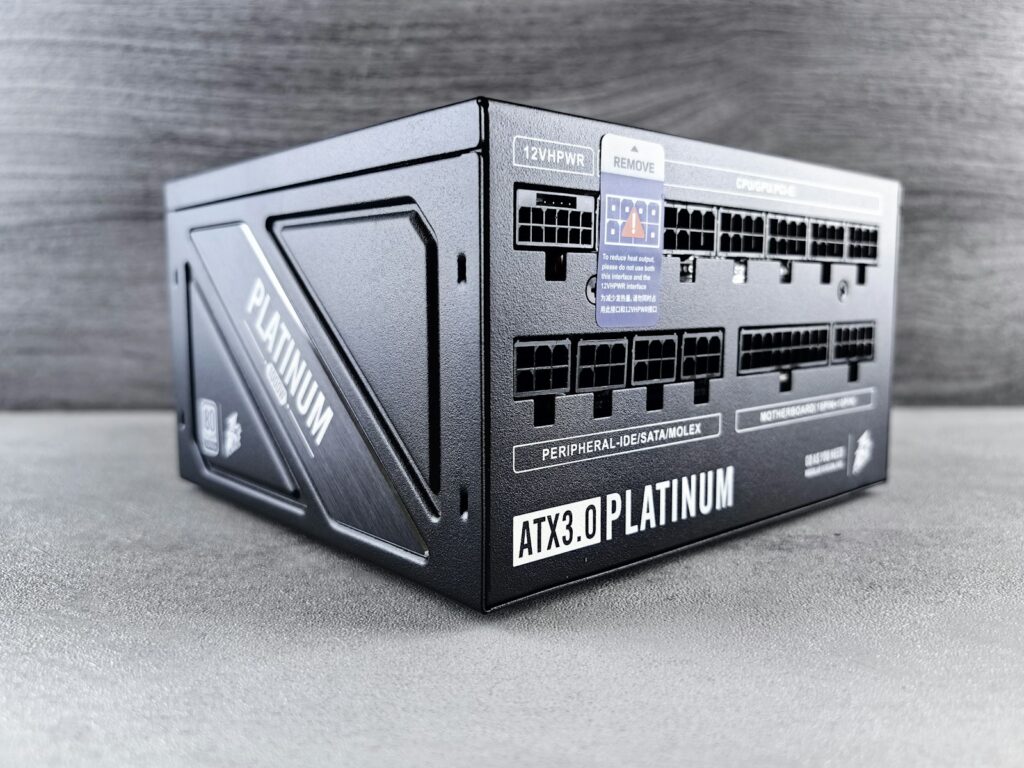
Understanding the Importance of the ATX 3.1 Standard
The transition from ATX 3.0 to ATX 3.1 is the most critical factor to consider when shopping for a PSU in 2026. While the previous generation introduced the 12VHPWR connector, it was plagued by reports of melting cables and poor connections. The ATX 3.1 standard introduces the 12V-2×6 connector, which features shorter sensing pins and a more secure locking mechanism. This ensures that if the cable is not fully seated, the PSU simply will not deliver full power, preventing catastrophic hardware failure. When you are looking for a unit under $120 to power an RTX 5070 or 5080, “ATX 3.1 Certified” is a non-negotiable requirement for future-proofing.
Why the RTX 5070 and 5080 Demand Better Power Logic
NVIDIA’s 50-series cards are remarkably efficient, but they are known for “transient power spikes.” These are millisecond-long bursts where the GPU demands double or triple its rated TDP. Older PSUs that lack the ATX 3.1 architecture often perceive these spikes as a short circuit, causing the system to shut down abruptly during intense gaming sessions. A modern $120 PSU is engineered to handle a 200% power excursion for short durations. This means a 750W ATX 3.1 unit is actually more stable for a modern GPU than a legacy 1000W unit from five years ago.
The Top Contender: Corsair RM750e (2026 Edition)
The Corsair RMe series has long been a staple of the $120 price bracket. The 2026 refresh specifically addresses fan noise issues found in earlier models while fully embracing the ATX 3.1 specifications. At 750 watts, it provides a comfortable overhead for an RTX 5070 and a modern Ryzen AI or Intel Core Ultra processor. The primary draw of the RM750e is its compact 140mm length, which makes it compatible with almost any mid-tower or SFF-plus case. Its 80 Plus Gold efficiency ensures that very little energy is wasted as heat, which in turn allows the fan to remain in “Zero RPM” mode during light tasks like web browsing or video streaming.
The Value Alternative: Seasonic Focus GX-750 ATX 3.1
Seasonic is often regarded as the original equipment manufacturer (OEM) king of the PSU world. Their Focus GX-750 remains one of the best values under $120 because of its legendary 10-year warranty. In 2026, peace of mind is a valuable commodity. The Focus GX series features a fluid dynamic bearing fan that is noticeably quieter than the Corsair equivalent under heavy load. It also utilizes high-quality Japanese capacitors rated for 105°C, ensuring that even if your gaming room gets warm during a summer session, the internal components of the PSU will not degrade prematurely.
Dealing with the 12V-2×6 Cable Management
One of the biggest headaches for new builders is the stiffness of the new power cables. When buying a PSU in this price range, look for units that offer “embossed” or “soft-braid” cables. High-quality ATX 3.1 units under $120, such as the Thermaltake Toughpower GF3, have started including more flexible 12V-2×6 cables. This is crucial because the new connectors require at least 35mm of straight cable before any bend occurs to ensure a perfect contact. A PSU that includes a flexible cable saves you the additional $30 cost of buying a third-party 90-degree adapter later.
Efficiency and Total Cost of Ownership
While the 80 Plus Gold rating is the standard for the $120 price point, you should also look for the “Cybenetics” rating. In 2026, the industry is moving toward Cybenetics Platinum and Gold ratings because they measure efficiency across the entire power curve, not just at three specific points. A more efficient PSU doesn’t just lower your electric bill by a few dollars a year; it generates less internal heat. Reduced heat means the components inside the PSU—such as the transformers and capacitors—will last much longer, often outliving the rest of your PC components.
Final Check: Is 750W Enough for an RTX 5080?
A common concern for builders is whether a 750W unit under $120 is “enough” for the more powerful RTX 5080. Based on current 2026 benchmarks, an RTX 5080 system typically pulls between 450W and 550W under full gaming load. This leaves a 200W buffer, which is the “sweet spot” for efficiency. Running a PSU at roughly 50% to 70% load is where it operates most effectively. Unless you are planning to overclock both your CPU and GPU heavily, a high-quality 750W ATX 3.1 unit is more than sufficient and safer than a low-quality 1000W unit.
Concluding Remarks
Choosing a power supply in 2026 is no longer just about picking a wattage and a brand name. It is about ensuring your components are protected by the latest safety standards. By prioritizing ATX 3.1 certification and the new 12V-2×6 connector, you protect your investment in an RTX 50-series card. Whether you choose the compact reliability of the Corsair RMe or the long-term warranty of the Seasonic Focus, spending your $120 on a modern, certified unit is the smartest move any PC builder can make this year. Check out how much power does a gaming PC Use.